
CAROL MACOMBER
artwork
audio 
- Childhood (47 sec. | 321KB): listen | read
- Photography (63 sec. | 430KB): listen | read
- Prairie grasses (52 sec. | 359KB): listen | read
- Process (33 sec. | 227KB): listen | read
- Max the cat (47 sec. | 324KB): listen | read
- Value art (49 sec. | 334KB): listen | read
audio text
Childhood
As a young child, I think I was kind of bold in a way. But you know you learn not to be too bold in school—that's probably the first thing they teach you. I thought kindergarten, the best thing about it really was the drawing, because we got a chance to do a lot of drawing. We had a lot of nice colors and things there.
At home, I think we did an awful lot of building things outside and playing outside. I had taken some art classes in junior high, but the art teachers always seemed kind of silly to me. I don't know, it just didn't seem serious enough, and I was basically pretty serious. The science teachers and the math teachers were just more my kind of people. I did like to draw, but I didn't have enough respect for art; I didn't think of it as anything other than toy time or something.
Photography
I decided, well, might as well go to Harvard Medical School and see if I can work in any of their labs there, and so I did. And I met my husband who was then a graduate student at Harvard. We got married, and when he graduated, we decided we'd like to live abroad. So we went to Turkey. And I saw this marvelous photo show by Edward Weston, and I thought, Hmm—now those are some photographs! I had been taking photographs off and on, but I'd never really thought of photography as a serious art form. It really hit me very hard that exciting things can happen, and just with black-and-white film.
Then after having been in Turkey for eight years, we came back here with a two-year-old, and I didn't know anybody around here, and after traveling in the Middle East and Europe, it looked pretty quiet to me. So I took a night class in photography. I just learned so many things that I had never known existed in the art world, because art photography really opens up a lot to you. So, that started me off.
Prairie grasses
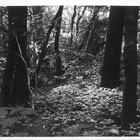
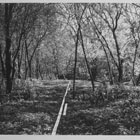
I think a lot of things that I'm photographing are probably not going to be around too long, considering the way we're developing things. I like to photograph things that are probably not too impressive when you see them out in the wild, necessarily, but just by choosing to photograph them, make them more important, and imply—which is a reasonable implication—that there are important things out there to look at and that everything shouldn't be just completely removed.
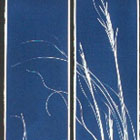
I've done these large prairie grasses. I decided that black-and-white photographs didn't seem to be making the prairie look as impressive as it felt to me. I wanted to use a nice paper, like Arches watercolor paper. And I thought it seemed really consistent to use an old printing method and use photograms for botanical specimens.
Process
I do like to photograph with natural light best, but I do have lights, and I have to use them, too. There's a lot of junk around here that I dearly love, and I'm just pulling things in all the time, it seems. If you just put it in the right light, then all of a sudden, you start seeing forms or lines or your mind starts working in a different way. You think of it as a little environment or a little space, and you add a little more of something, and then you see how things open up. It's like a little story or something that unfolds.
Max the cat
I did a really big print of a mannequin that had a skin on its back. I did a really big print of it, and I had it down in the basement. Well, my cat, Max, was trying to get somewhere that he couldn't quite get to very conveniently. I guess he missed the shelf or something—so his claws dug in and he drew these lines down this picture. I was so annoyed, because it's hard to make a big print, and it's expensive, both in time and in just materials. But then I thought, Gee, you know, those scratches were made by a real living furred animal. So I thought, There's some things that do happen that help you out. I didn't give him credit, though, except just now!
Value art
I think I value making art more now than I did, say, twenty years ago. I know it's more important to me, and I know it matters less to me that it's important to anybody else. I mean, everybody enjoys good comments, but the fact that it's important to me is what matters.
Sometimes people are just not in tune with you quite yet, but they might be in tune with you later. You know, you have these ideas and people look at you as if, oh my goodness, she can't mean that. But then you find five years later, they're saying the same thing, and it's perfectly fine. So, it's a matter of timing or slant on things.
Art is really important. It's worth doing. And everything in life doesn't have to be completely practical. If you really think you like to do it, then see how far you can go!