
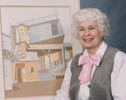
GRETCHEN GRETA COY
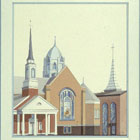
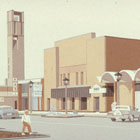
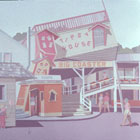
artwork
audio 
- Early interests (37 sec. | 252KB): listen | read
- College (48 sec. | 328KB): listen | read
- Artwork (33 sec. | 226KB): listen | read
- Grief & art (39 sec. | 265KB): listen | read
- Joy in process (56 sec. | 380KB): listen | read
- Advice (38 sec. | 262KB): listen | read
artist statement
Art helps to put that magic, basic ingredient into everyday life. Curiosity, imagination and enthusiasm are all a part of the art world. Somehow it carries over into other fields like observational skills, decision-making skills, and most importantly, those appreciational skills.
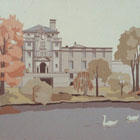
Another generation may share their creative knowhow to enjoy like Victorian houses. The creative energies have offered some great designs down through the ages. Iowa towns have some of those speical charms which add so much to their communities.
Art is not just for the past but for the future also. There is always something wonderful to learn about design and color. It puts a little adventure into life to see a new car design!
Everywhere I look there are those harmonious colors and designs to be enjoyed, Iowa prairies, lakes, swirling clouds and old church steeples. Light is a fascinating design element that is constantly changing with such delightfulness. Art is everywhere, everyday.
2000
audio text
Early interests
I had a wonderful seventh grade art teacher. So, every once in a while you get a teacher that's really dedicated and the enthusiasm just comes out. And I had an uncle that was a janitor at Beardshear, and he used to give me nickels during the Depression so I could go to the art shows that were put on by Iowa State. And I remember once winning the little miniature Old Master art pieces. I still have those little pictures—they gave me a set of them. And then there were marionette shows for a nickel. Anything that was in the arts, I was kind of liking. And I also liked math and science, so I had another side.
College
My parents said, "Don't take art, take something else. You'll be poor if you take that." They went through a Depression, so they were thinking of financial stuff. So I couldn't be as creative as I wanted to, so I took very tough courses. I took engineering courses and lots of math. I can remember going to Iowa State, could hardly wait 'til those classes of Miss Edna O'Brien—she was an art teacher there. And I was so excited about it. I got very nice grades in chemistry, but I still loved the art.
I took one year at the University of Texas, and it was a special wartime aeronautical engineering program by Curtis-Wright. And that really helped my artwork, because the drafting, the perspective and everything you learn for drawing buildings—although it was airplanes then.
Artwork
I lean towards the buildings—the building environment—because my husband was a builder. I look at rooflines and find all kinds of interesting shapes. I guess my line would be called stylized hard-edge. And I was really inspired with Professor Richard Heggen at Iowa State. I took lessons from him every Monday night for a long time.
And the other kind—as I said, I'm sort of two-sided—I get into the wildlife and the nature, and up here at the lakes there's just no ending, it's just all beautiful. Everything could be a painting.
Grief & art
We lost a son—he was in the Vietnam War, and when he came back he had a car accident. And when he died, I thought, Oh, I'm going to give up painting. It was hard to take grief. Everything was working out in my life until then. So I wasn't sure how to handle it. I was religious, but that didn't help. And then I had a friend in Ames—Mary Lou Wright, an artist—and she called and she said, "Come over, let's paint." Well, I went, and I started one of the most wonderful paintings I had done. So I came back and thought, Well, my strengths are still there; I've still got it. And so I started in again. But I almost quit.
Joy in process
It's amazing what joy comes of it, to getting it to look like what you visualized. When it gels, oh, it's really a great feeling. I think that's one reason that I'm painting, because it has so many happy moments. Satisfaction, enjoyment, enthusiasm—oh, it just sparks up your life. When the sun's hitting that lake out there, there's a riot of colors if you really look. And I've found that art gives me a chance to really look, see things—shapes, shadows.
The most satisfying aspect of painting is the process. And then, of course, if it turns out wonderful, that's an extra bonus. And then also knowing that other people will get up in the middle of the night and look at your painting—one that you've sold—and then they'll call you on the phone. Or if they send you lots of thank-you notes. But the most satisfying reward is the process—doing it, beginning.
Advice
Learn all you can about the art world. Go to all the museums that's available. Attend art shows. And always keep drawing. Have a book of sketches that's your own, and fill it up with little pictures that you see. Anything to practice. I think drawing is where it's at. So I would sure get all the knowledge I could. Buy books. Do anything to learn. Anybody that comes around that's a national artist, go out and see what they have to say.
It's always very satisfying to express this creative stuff that's kind of inside of you; it has to come out. So it makes you a happier person.